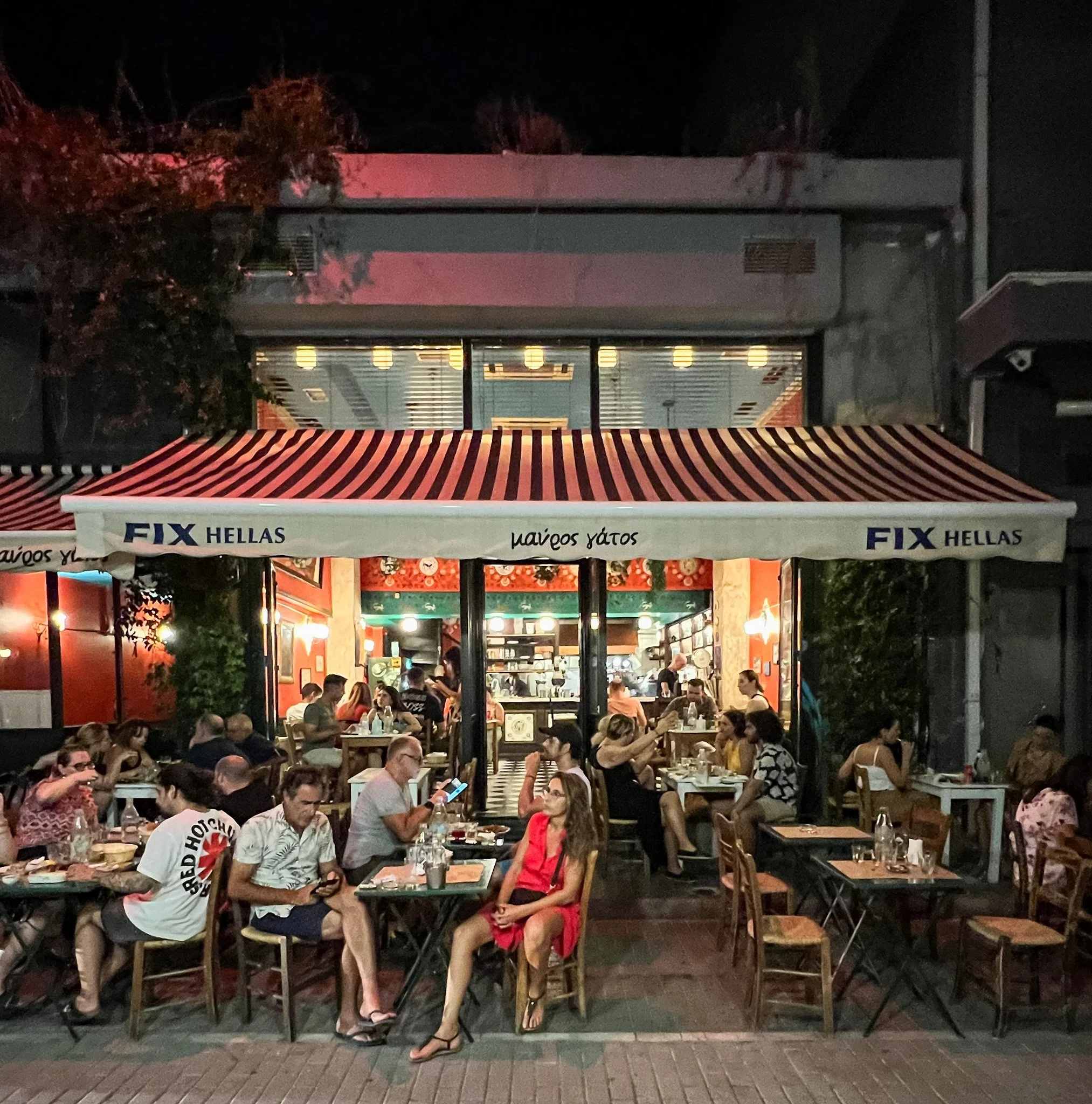
Eating Out in Greece: The Unwritten Rules Everyone Should Know
One of the best parts of travelling to Greece is eating out. It doesn’t matter if you’re on an island, in Athens, Thessaloniki or deep in the mainland. Food sits at the centre of daily life. It’s social, generous and it moves at its own pace. That pace can feel unfamiliar at first.
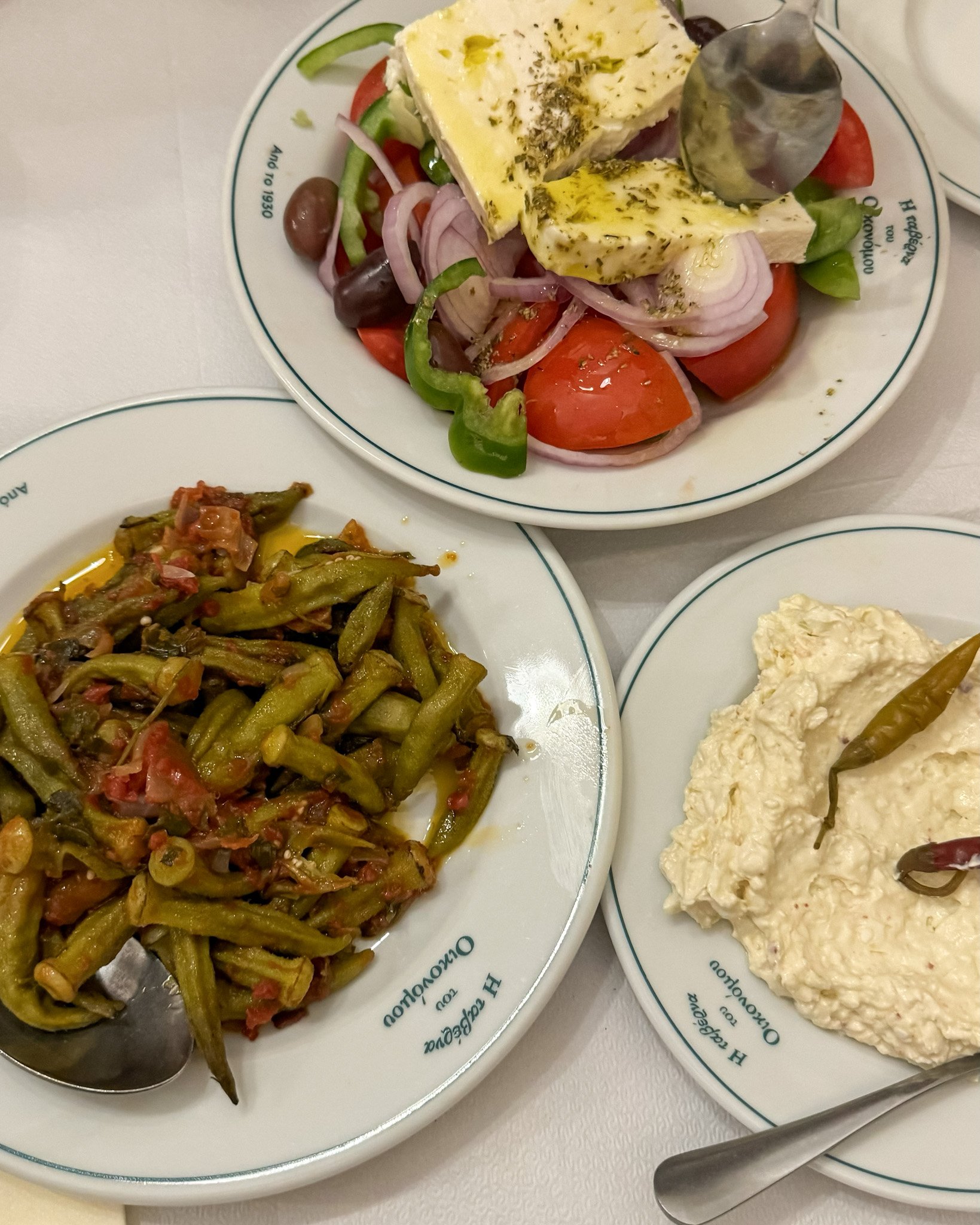
Dinner at one of Athens’s many amazing tavernas
Dinner doesn’t happen early. Forget 5.30pm seatings, you’re probably still full from lunch. Kitchens don’t close at 9.00pm, they’re often only just getting started then. You head out around nine, sometimes later and the best bit, nobody is rushing you out the door for a second seating. Meals stretch. Conversations stretch even longer.
As soon as you sit down, bread and water arrive on the table. They’re both billed, but it’s minimal and expected. Forget asking for butter. Bread here is eaten with extra virgin olive oil. And bread isn’t a side, it’s a vessel. You use it to scoop up the juices from a horiatiki or clean the plate after a slow-cooked kokkinisto. Leaving those flavours behind feels so wrong.
Meals are meant to be shared. This goes beyond mezedes. Dishes are placed in the middle of the table and everyone helps themselves. Ordering one dish per person feels strange here. Food is communal. Portion sizes are generous, so when ordering, as hard as that may seem, always drop one dish. You won’t need it.
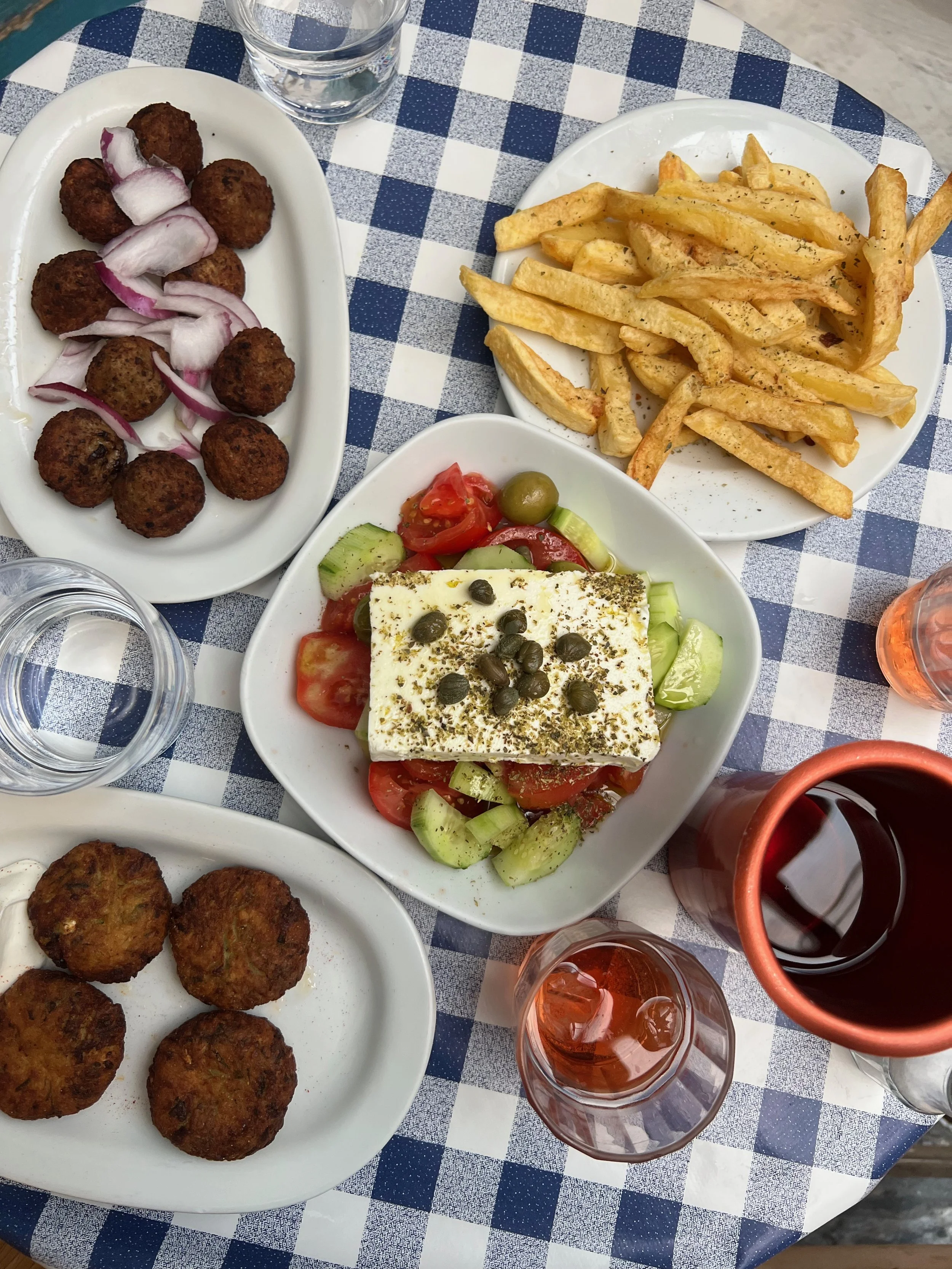
Love the wine sold in quarter or half litre jugs
Unlike places where servings are big but the food is forgettable, Greek food delivers substance. It’s rich, satisfying and made with real ingredients, most locally sourced. Extra Virgin olive oil, vegetables, legumes and slow-cooked meats. And as most Greek food is not processed, you will feel full and nourished, not heavy or sluggish.
Wine flows slowly. It’s part of the meal, not the point of it. Alcohol is enjoyed with food, over time and again rarely rushed. Sitting for hours with a carafe of house wine on the table feels normal. And another thing worth knowing, the house wines are good. Really good. Don’t be afraid to order a half litre of chilled house rosé for €7. You’ll be pleasantly surprised.
And then there’s the bill. In true Greek no-rush culture, it won’t arrive unless you ask for it. Sometimes you need to ask more than once. Sitting long after you’ve finished eating isn’t rude. It’s expected.
Once that moment passes, something else often appears. Kerasma. Greeks are deeply hospitable and filoxenia, the love of strangers, is part of everyday life. A small sweet arrives on the house. Yoghurt with honey, watermelon, spoon sweets or a piece of portokalopita. It’s a thank you, a final gesture before you leave.
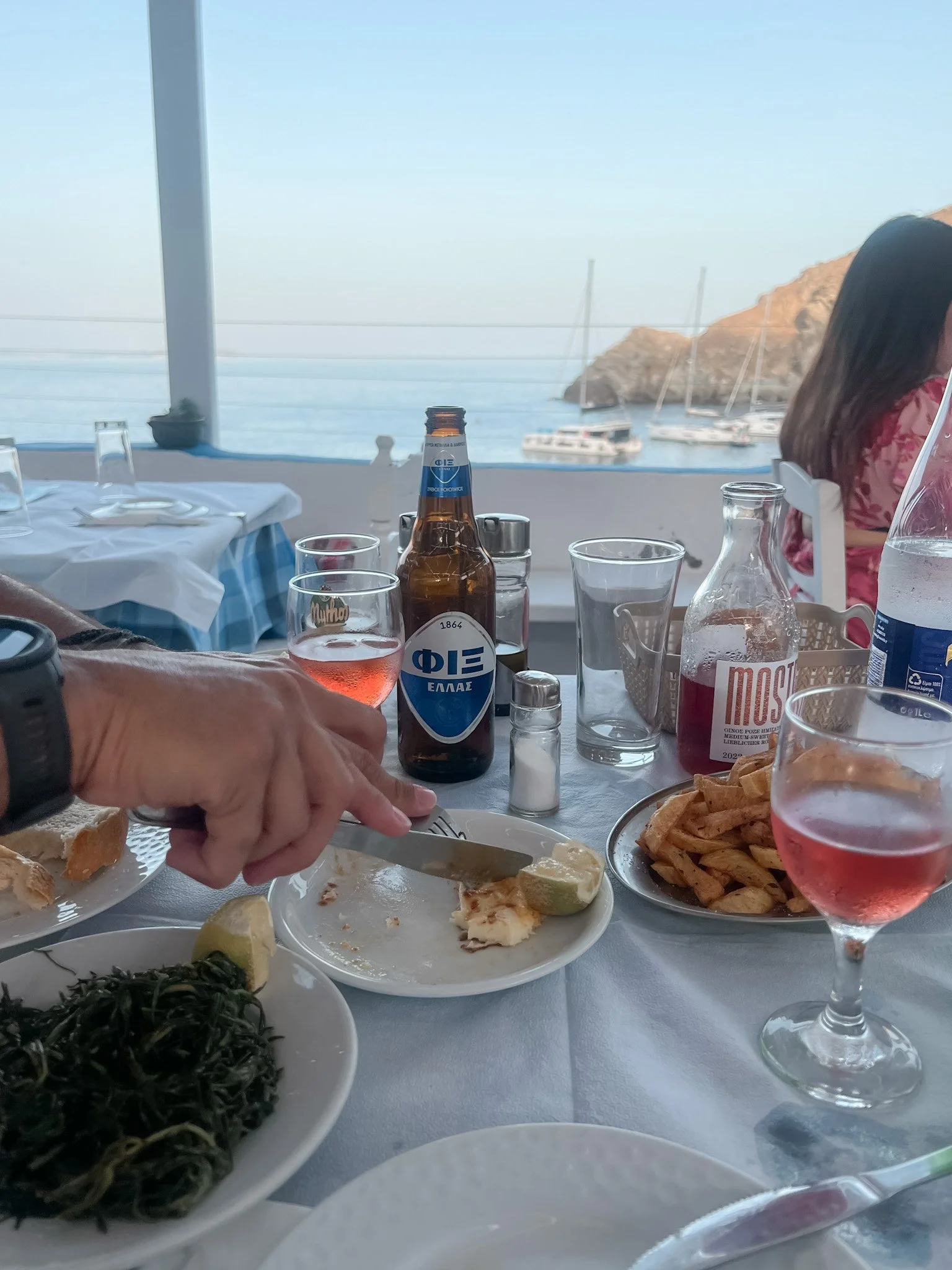
Relaxed leisurely meals is what Greece is all about!
It usually takes a few days to adjust. The late nights, the long lunches, the lack of urgency. Then something shifts. You stop checking the time. You slow down without realising.
And before you know it, eating the Greek way feels natural. Leaving it behind is the hardest part.
If you’re heading to Athens, you will see it first hand. From neighbourhood tavernas to late dinners that turn into long nights. I’ve pulled all of my favourite places, areas and food spots into the Athens guide I have it all sorted for you.
Planning a trip to the islands? I have guides to Sifnos, Naxos, Milos and Folegandros. Every recommendation paid for by me.